
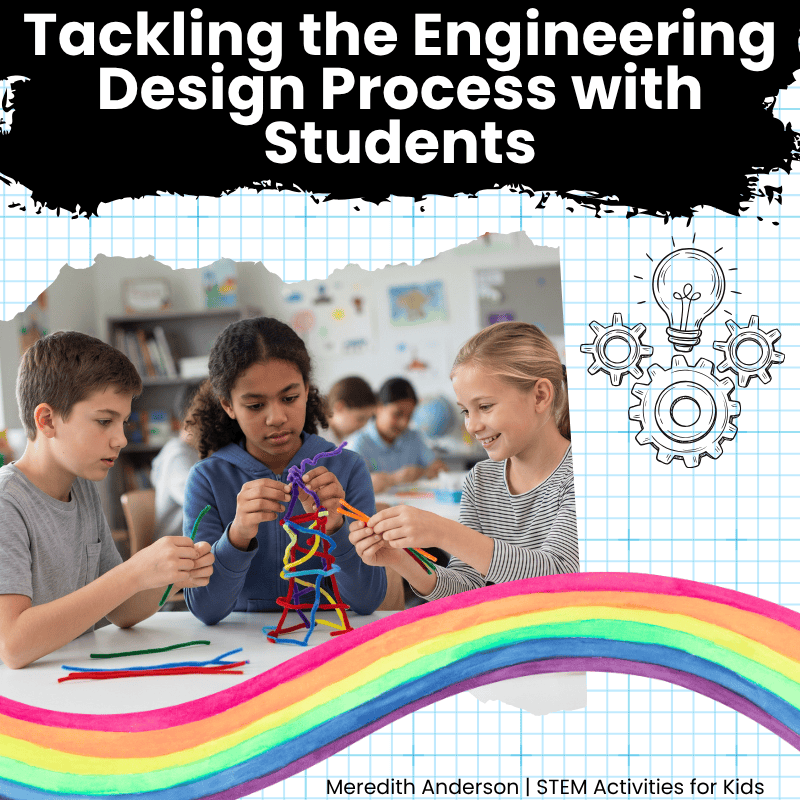
Bringing the Engineering Design Process into Your Classroom
The engineering design process is one of the most powerful (and fun) frameworks we can teach elementary and middle school students in STEM class and beyond.
Let’s take a look at what the engineering design process actually is, how to teach it, why it matters, and what your students gain from learning it.
What Is the Engineering Design Process?
The engineering design process (EDP) is a series of steps engineers use to solve problems. While there are several versions floating around (some with 5 steps, some with 8), most boil down to the same core cycle:
- Ask – Identify the problem. What do we need to solve? What are the constraints (time, materials, budget)?
- Imagine – Brainstorm possible solutions. No idea is a bad idea at this stage!
- Plan – Choose one idea and sketch or describe the design.
- Create – Build a prototype based on the plan.
- Test – Try it out. Does it work? Does it meet the requirements? (I usually include Test in the Create step to simplify the process.)
- Improve – Use what you learned to revise and rebuild.
The key feature that sets this apart from a typical worksheet or lab is that last step: it’s a cycle, not a line. Students don’t just do the steps once and move on; they circle back, improve their designs, and try again with sometimes up to 3-5 iterations.
How to Teach the Engineering Design Process
The best way to teach EDP is through hands-on challenges. Here’s a simple approach that works well across grade levels:
Start with a real (or realistic) problem.
Give students a scenario with a clear goal and some constraints. For example: “Design a bridge that can hold 10 pennies using only 20 craft sticks and binder clips.” A defined problem with limits helps encourage creativity rather than overwhelming students with too many choices.
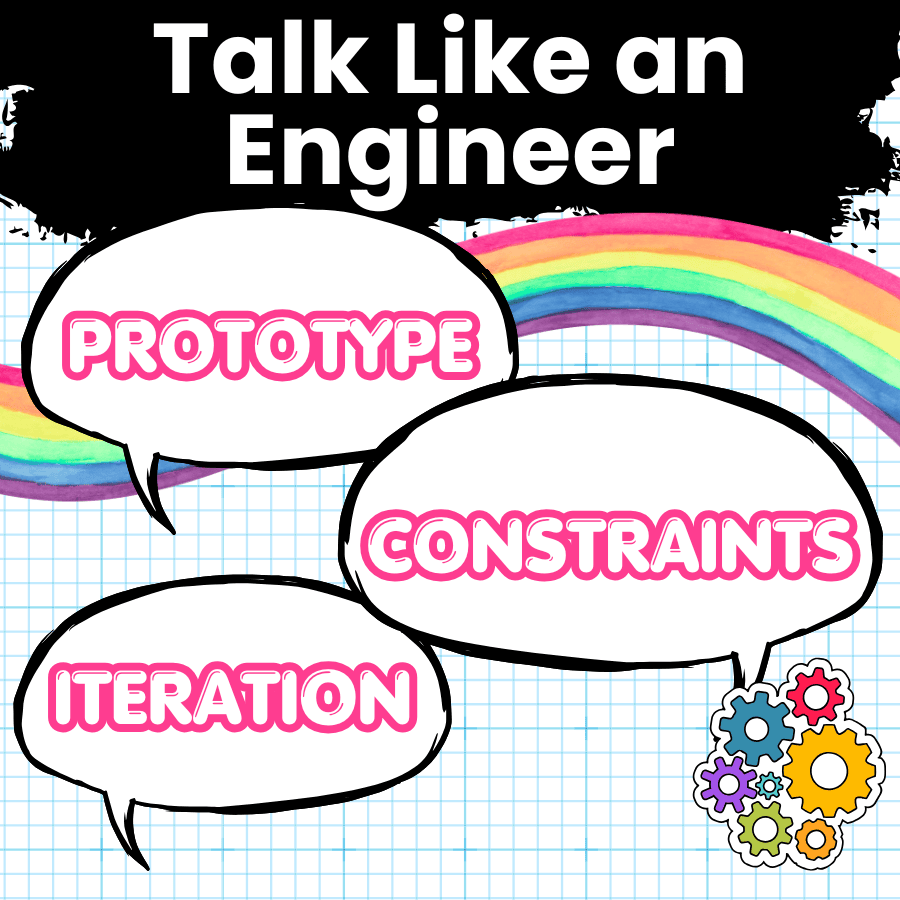
Model the vocabulary early and often – I call this “Talk Like an Engineer”
Introduce words like prototype, constraint, iterate, and criteria before students dive in, and keep a classroom anchor chart posted so they can reference the steps as they work.
Let them fail (and celebrate it with them!)
This is often the hardest part for teachers (especially if you are also a Type A teacher!). When a prototype collapses or doesn’t work, resist the urge to fix it or offer your own solutions. Ask guiding questions instead: “What happened? What could you change next time?” Failure is a data point, not a dead end.
Build in time to test and redesign.
A single build-once activity teaches construction, not engineering. Make sure your lesson includes at least one round of testing and revising, even if it means a shorter initial build phase. The iteration portion of the EDP is truly the most magical!
Reflect as a group.
After the challenge, have students share what worked, what didn’t, and what they’d try differently.
Engineering challenges pair well with picture books, science units on forces and motion, and even historical or cultural studies — designing solutions inspired by real-world engineering marvels, sustainability challenges, or inventions throughout history.
Why the Engineering Design Process Matters…Even if you aren’t a STEM teacher!
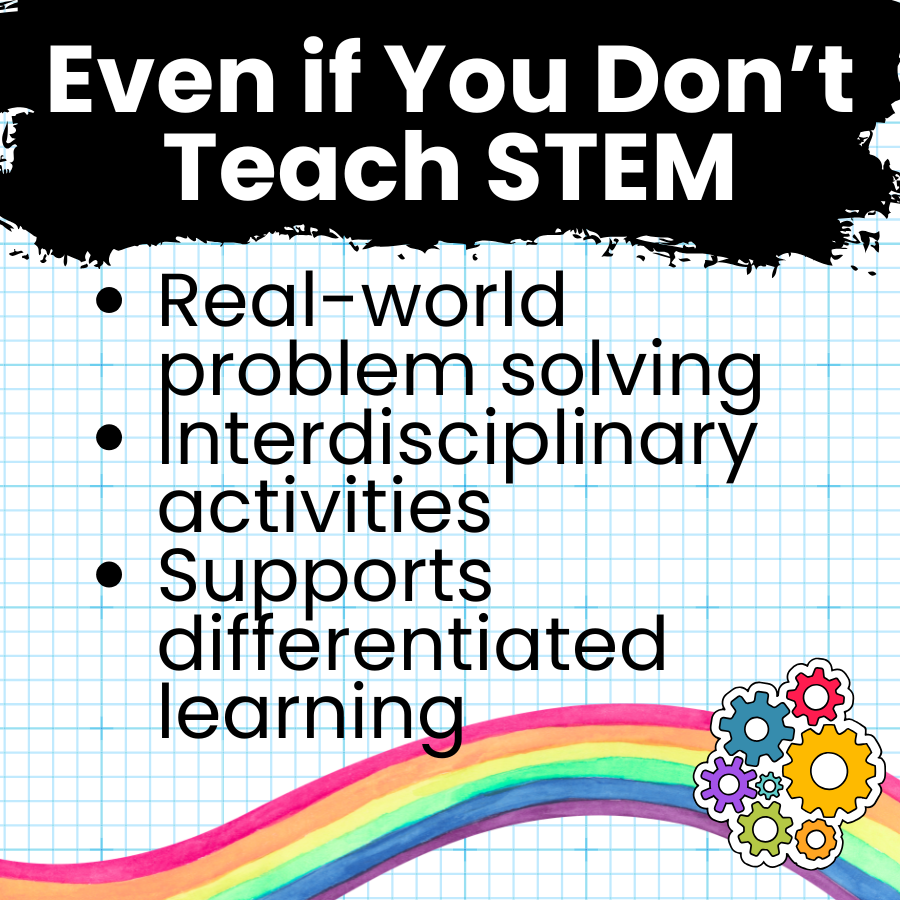
You might be thinking, “I’m not raising a classroom of future engineers — why does this matter for every student?” Here’s the thing: the EDP isn’t just for kids who want to grow up to build rockets or bridges. It’s a transferable thinking process that applies far beyond a STEM career path.
It mirrors how real problem-solving works. Very few meaningful problems are solved perfectly on the first try. Teaching students to expect revision, rather than treating their first attempt as final, builds resilience and adaptability that serves them in every subject and, eventually, every job.
It’s inherently interdisciplinary. A well-designed engineering challenge naturally weaves in math (measurement, geometry), science (forces, materials, systems), literacy (labeling, explaining, presenting), and even art (design, aesthetics). It’s one of the easiest ways to create genuine cross-curricular learning.
It supports differentiated learning. Because there’s rarely one “correct” answer, students at different skill levels can all engage meaningfully. A struggling student and an advanced student can work on the same challenge and both walk away having learned something at their own level.
How Students Benefit
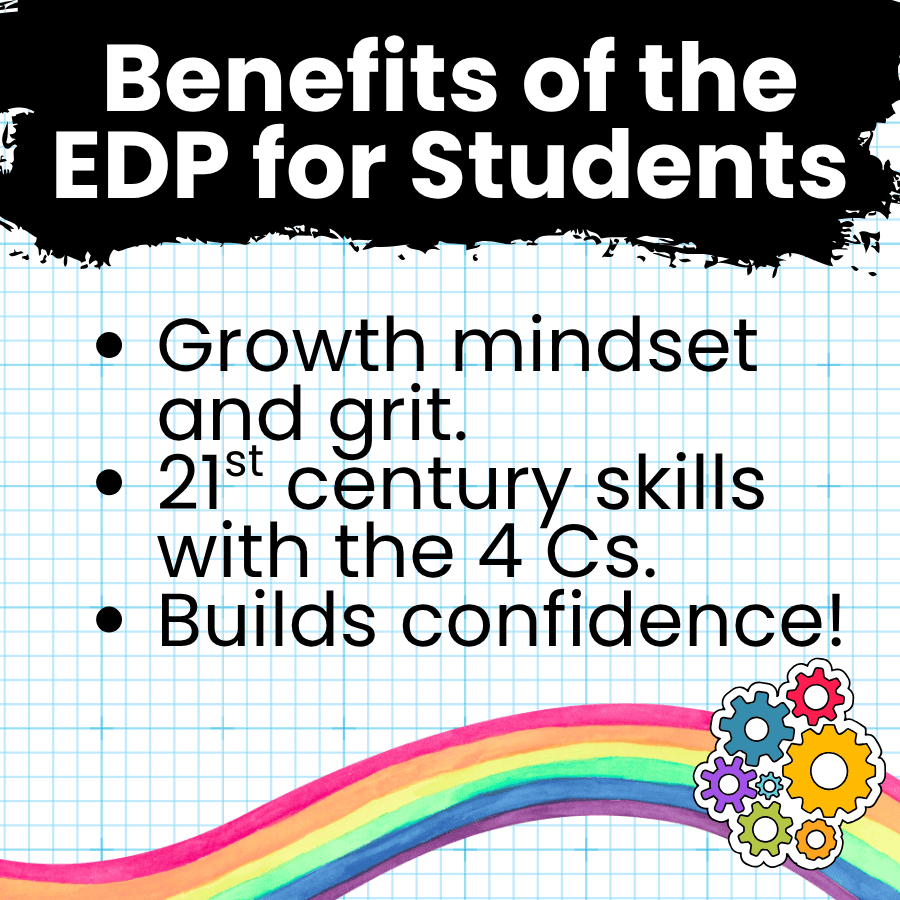
When students regularly practice the engineering design process, the benefits show up well beyond the science classroom:
- Growth mindset in action. Students learn firsthand that failure is part of the process, not a final judgment on their ability. This builds genuine resilience, not just the classroom-poster kind. Grit is something we can build with students and it is a fantastic trait to develop!
- Collaboration and communication skills. Most EDP challenges work best in small groups, giving students authentic practice negotiating ideas, dividing tasks, explaining their reasoning to peers. I recommend pairing off youngest students and forming groups of 3-4 in upper elementary and middle school.
- Critical thinking. Students practice analyzing a problem, weighing trade-offs, and justifying their design choices.
- Confidence and ownership. There’s something powerful about building something with your own hands, testing it, and improving it. Students take pride in their designs and innovative ideas!
- Real-world relevance. Students start to see connections between classroom learning and the world around them, from the playground equipment they use to the buildings they walk past every day.
Getting Started with the Engineering Design Process
You don’t need a full STEM lab or a room full of expensive gadgets to bring the engineering design process into your classroom. Simple materials like cardboard, tape, paper, straws, cups, and string, combined with a clear problem and a little planning time can lead to some of the most memorable learning experiences of the year.
Start small: pick one challenge, walk your students through the problem, criteria and constraints, and let them experience the “ask, imagine, plan, create, test, improve” cycle firsthand. Using the EDP each and every time helps students have a predictable and reliable routine with STEM.
Get STEM Challenges for the EDP and a Dedicated EDP resource!
I have created dozens of easy-to-use, low prep challenges for elementary through middle school students to explore STEM. Get one of these discounted bundles to make planning easy.
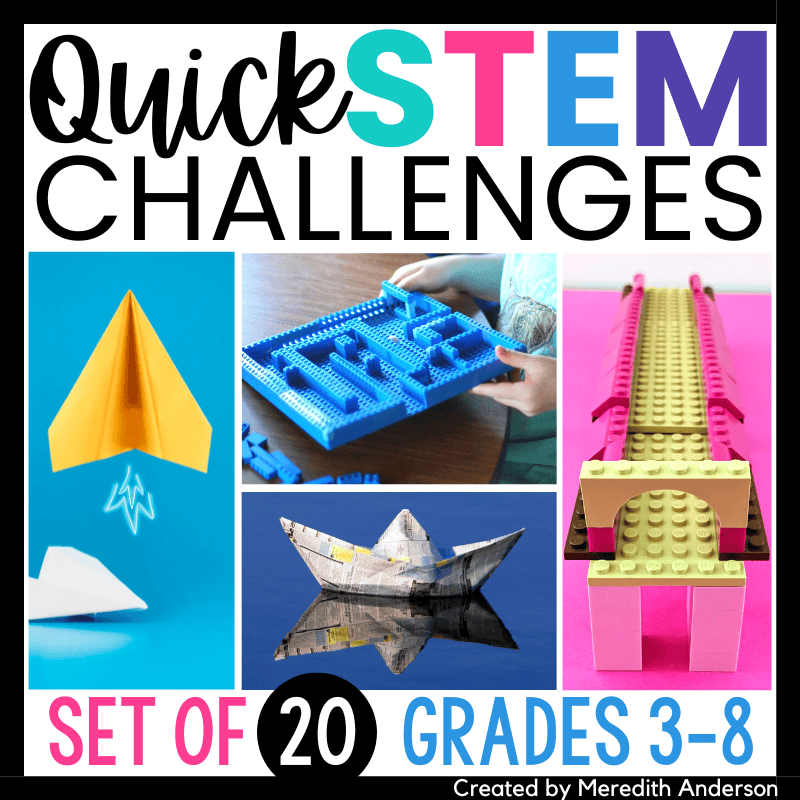
Need just the STEM challenges? Pick my set of 20 career-focused challenges!
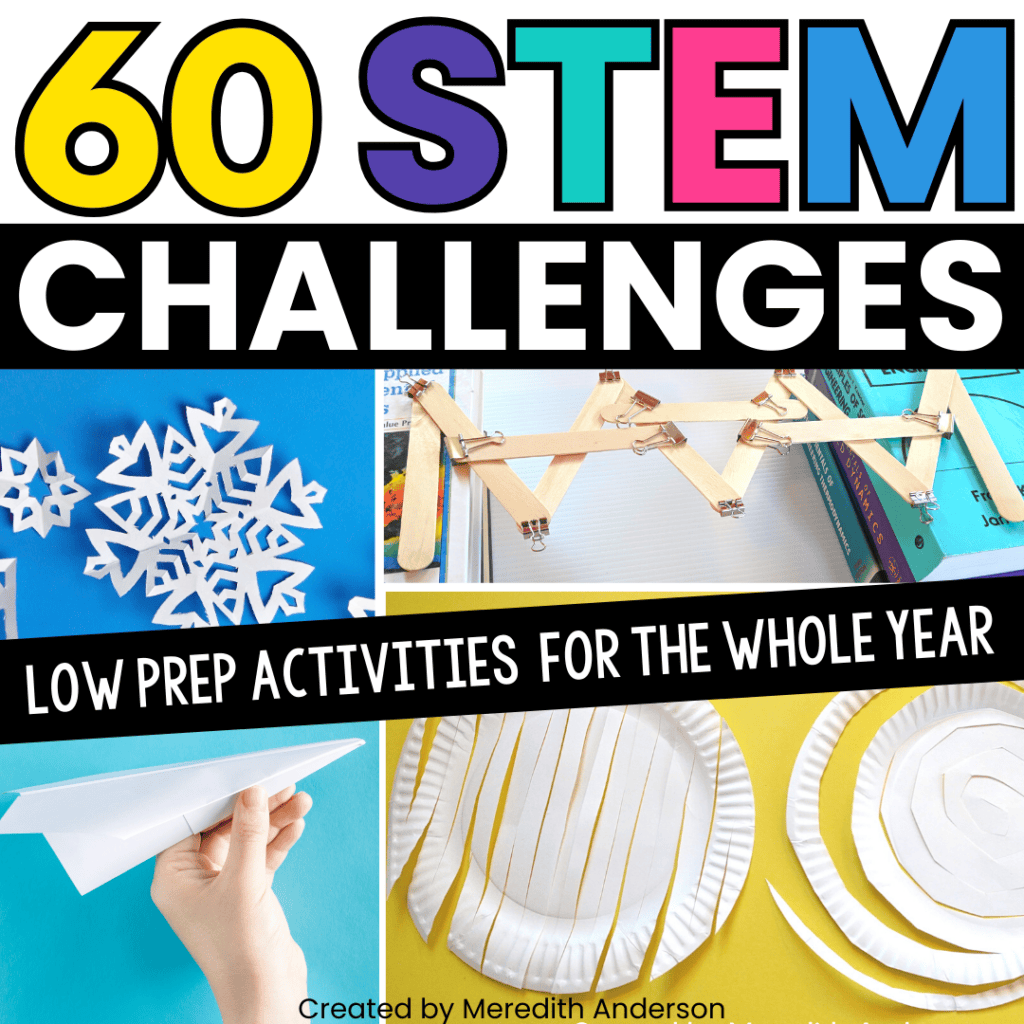
Want a comprehensive resources with EDP activities plus 60 STEM challenges? The middle option is for you. It includes all of the challenges in the 20 and 30 pack bundles plus more!
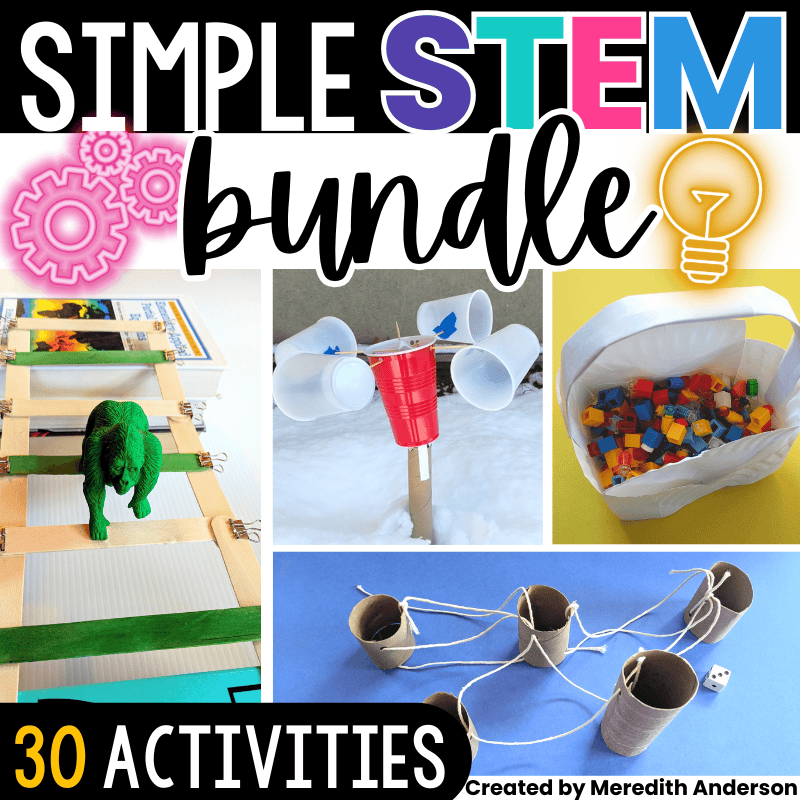
Want to keep is simple? Pick the 30 simple STEM activities on the right, which use cardboard tubes, paper plates, popsicle sticks, cups, and string.
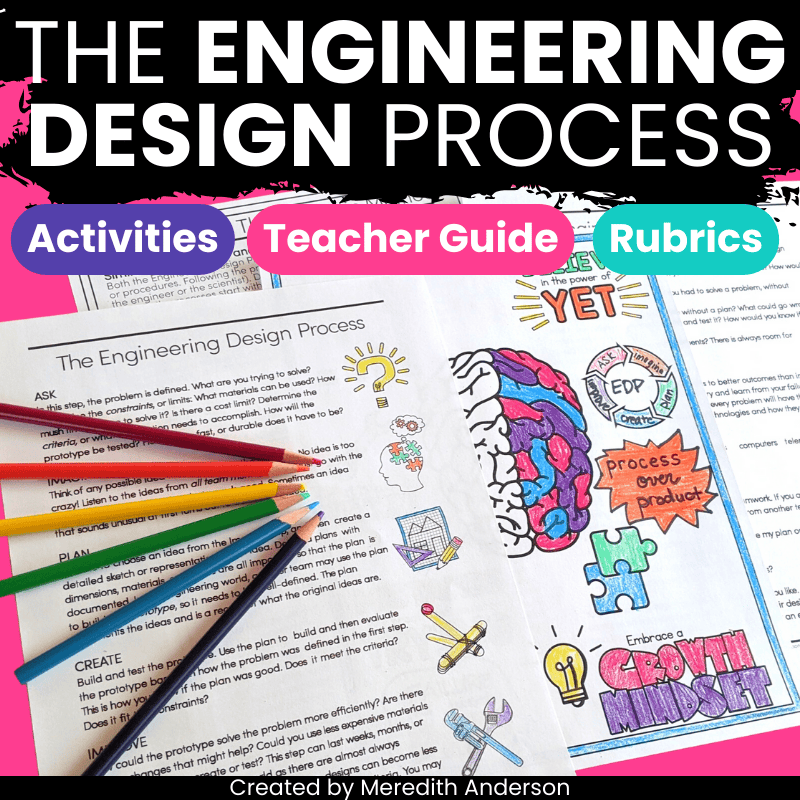
Get the dedicated EDP resource here:


Leave a Reply
Your email is safe with us.